Scenario and dispatch modelling
Hourly and sub-hourly modelling of generation, demand and storage against price and policy scenarios.
Capabilities
Six practices that share one delivery model. Most mandates draw on two or three of them, which is the reason they sit in the same firm rather than in six different ones.
01 Strategy
For utilities, transmission operators, industrial buyers, ministries and development banks.
Every client we work with is making a bet about the shape of their system in 2040 while signing contracts that bind them next quarter. Our job is to make that bet explicit, quantify it, and keep the assumptions visible when they change.
We build generation and dispatch models, flexibility and storage cases, offtake and PPA structures, and the regulatory reading that sits underneath them. Where a client already has a model, we usually start by auditing it: most disagreements in an energy strategy turn out to be disagreements about three or four inputs.
Deliverables are built for the people who will have to defend them. That means a board version and a technical annex that a lender's adviser can pull apart, not a single deck that satisfies neither.
Hourly and sub-hourly modelling of generation, demand and storage against price and policy scenarios.
PPA structures, merchant exposure, capacity mechanisms and revenue stacking across markets.
What the current EU package, national implementation and grid codes mean for a specific decision.
02 Delivery
Owner's engineering and programme direction on projects already in motion.
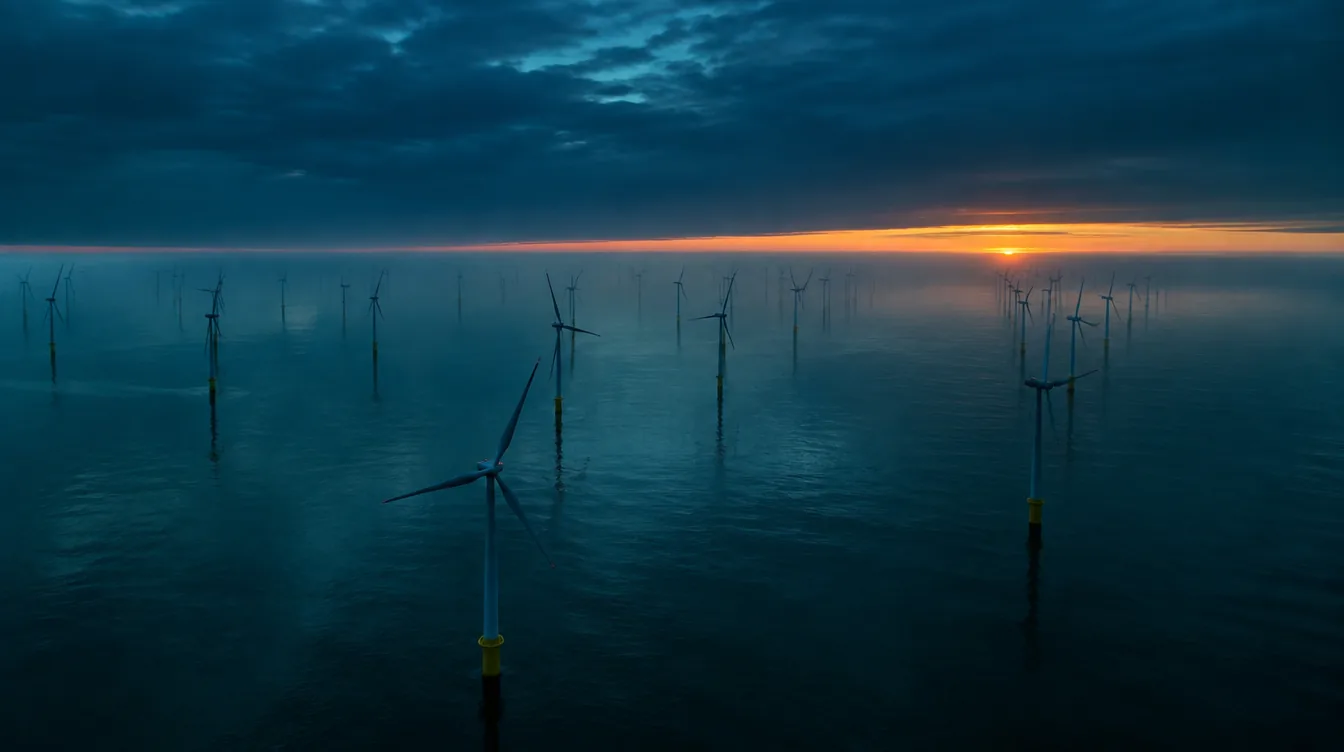
We sit on the owner's side of the table. That means design review, interface management, factory acceptance, installation oversight and the unglamorous close-out work that decides whether a project hands over cleanly.
The practice grew out of our work with Danish developers and engineering houses, and it keeps that bias: conservative on structures, sceptical about first-of-a-kind claims, and willing to say when a schedule is not real. Our engineers spend time on vessels and in factories, not only in review meetings.
Monopile and jacket design review, geotechnical interface, fatigue and installation loads.
Cable specification, routing, burial risk, testing and failure investigation.
Cost, schedule and risk ownership across packages, with reporting lenders accept.
03 Grid
The connection point where most projects quietly fail.
Connection studies, stability and harmonic analysis, grid-forming control strategy, storage sizing and the commercial case for flexibility. We run the studies and we defend them with the system operator.
A growing part of this work is review: lenders and owners asking us to check somebody else's study before they commit. We do that without theatre, and we say plainly when the original work was sound.
Load flow, short circuit, harmonics, dynamic stability and grid code compliance evidence.
Sizing, duty cycles, degradation assumptions and control philosophy for hybrid plants.
Application strategy, curtailment terms and the technical arguments behind them.
04 Molecules
Mostly German industrial clients, increasingly with North African supply attached.

The question in a plant is rarely which technology is most interesting. It is what replaces a specific burner or furnace, where the power comes from, what it costs per tonne of product, and which step has to happen first so the rest becomes possible.
We work through that with process engineers and site management: technology selection, plant concept, utility and grid implications, offtake and certification logic, permitting strategy and a sequencing plan that fits maintenance windows rather than ignoring them.
Electrolysis, heat pumps, electric and hybrid furnaces, assessed against the real process constraints.
Import routes, derivatives, certification schemes and what they demand in practice.
The order of works that keeps production running while the site changes.
05 Research
Optics, quantum sensing and nanostructured materials.
A laboratory group attached to a consultancy is unusual. It exists because a growing share of our client questions end at a measurement nobody can make reliably in the field, or a material that fails at an interface.
Part of the programme runs inside European consortia and is published with partners. Part is developed under client confidentiality, and some of it is held for patent filing. Both halves are described in general terms in public and in detail under NDA.
06 Data
Where our software and AI heritage earns its place.
Acentrium spent a decade building data platforms and delivery teams for regulated industries. We kept the engineering discipline and pointed it at operational energy data: SCADA, sensors, weather, market prices and maintenance records.
Models matter less than the pipelines underneath them. We build ingestion, quality checks and lineage that an engineer will actually trust, then put forecasting, anomaly detection and degradation models on top. Security and the boundary between operational and corporate systems are designed in from the start, not retrofitted.
Time series ingestion and storage, quality gates, lineage and cost control at volume.
Forecasting, anomaly detection and degradation models that survive contact with operations.
OT and IT boundaries, access control, retention and audit trails.
Next step
Most engagements start with a short scoping conversation and a written note back from us within a week. No charge for that first note.